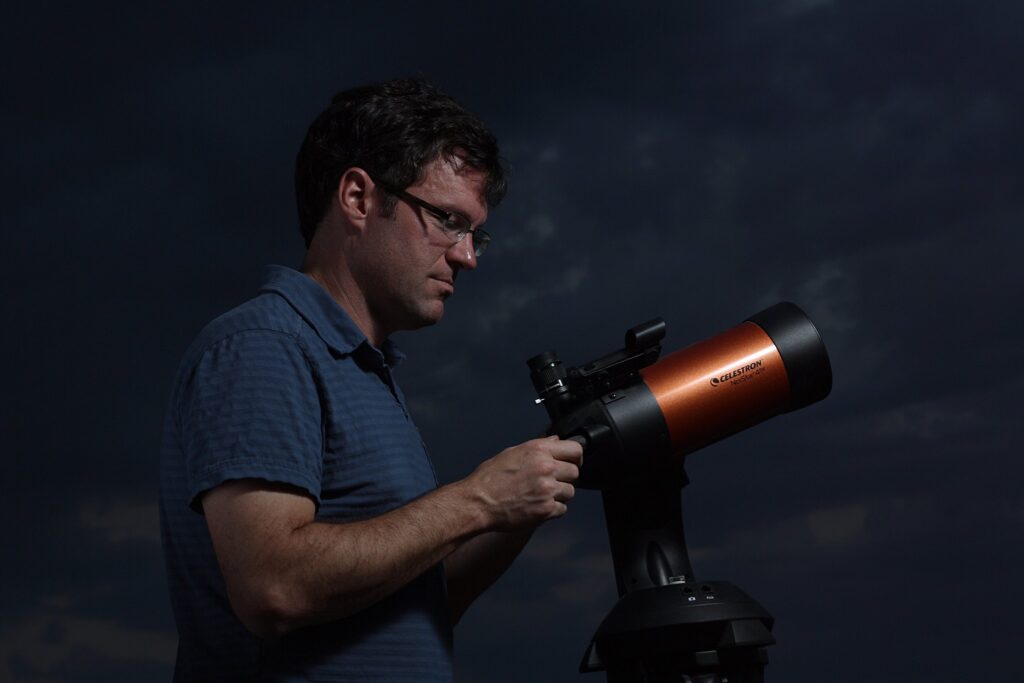
Time Lord No. 2: Craig Callender
If McTaggart can be accused of blowing up time with his bombshell theory, it is easy to imagine Craig Callender walking calmly through the destruction, magnifying glass in hand, examining the rubble with a physicist’s eye and a philosopher’s patience.
Callender is a philosopher of physics at UC San Diego who occupies the fault line between physics and metaphysics. What impressed me most when I first encountered his work was not simply his résumé, but his range. He doesn’t just speculate about time; he understands the physics well enough to know when and where speculation must stop.
That combination of skills, conceptual clarity and scientific literacy, is rare. It is also formidable.
I began with Introducing Time, his accessible graphic guide, and later moved on to What Makes Time Special? The first asks the deceptively simple question, “What is time?” The second assumes you have already wrestled with that question and instead asks something more precise: if physics treats time as just another dimension, why does it feel so different, so special, to us?
Callender’s central position, as I read him, is to resist inflating the “problem of time” into a full-blown metaphysical crisis. Much of what troubles us — the flow of time, the privileged “now,” the sense of becoming, may not be features of the universe itself, but instead are features of creatures like us who are embedded within it.
Physics, Craig explains, especially relativity, sits comfortably with what philosophers call eternalism: the idea that past, present, and future are equally real within a four-dimensional spacetime. He tells us further that there is no cosmic spotlight sweeping across the block, no privileged “now” marching forward.
That alone unsettles most people.
But Callender’s position is subtler than simply declaring that time does not exist. He asks whether we are confusing features of human psychology with features of fundamental reality: the feeling that time flows; the intuition that the future is open while the past is fixed. What if these are just products of how creatures like us process information?
That suggestion hit me hard.
At seventy-five, the passage of time doesn’t feel like an illusion. It feels like a drumbeat. My knees confirm it daily. My calendar confirms it monthly. The idea that the universe itself might not contain a flowing “now” moment flies in the face of my experience.
And yet.
Callender forces a discipline on the entire conversation. He reminds us that physics describes a world in which temporal relations are laid out structurally. If something like “flow” is happening, it may be happening inside our heads, not in spacetime itself.
When I first read Callender, I felt a flicker of envy. Here was someone who moved effortlessly between physics and philosophy, fluent in both languages. At seventy-five, I read him differently. Not with envy, but with gratitude. He models the kind of intellectual integrity I admire deeply: follow the science, and maintain conceptual clarity.
Time may remain mysterious, but thanks to thinkers like Callender, the mystery is at least better posed.
Welcome, Time Lord #2, Craig Callender!