

- Surviving ASI: Part I – The Good
- Surviving ASI: Part II – the Bad
Earlier this week, I was slouched over my monitor, doing my usual morning scroll through YouTube, when I found a video of an interview with a guy I follow, Mo Gawdat who was being asked about the coming artifical superintelligence (ASI). In doing so, Mo used a word to describe our future that I’d never heard him use before: dystopian.
If you don’t know Mo, he was the chief business officer at Google X, the R&D division that tries to turn science fiction into actual reality. He’s not a fear monger. He’s thoughtful, technical, and unusually grounded for someone who spent years traversing the bleeding edge of innovation.
That’s partly why his choice of language stopped me. You see, Mo has always leaned slightly utopian. He’d say things like “it’ll get worse before it gets better,” but he never lingered on the worse. He moved past it quickly, as if it were a necessary but uninteresting footnote.
But dystopian is never just a footnote. It is a word that occupies a seat at the table.
Why? Because a dystopian society, by definition, is characterized by misery and oppression; loss of freedom and control; whether by corporations, governments, or technology itself. In other words, if dystopia is the prediction for our future, then things are not just going to get “worse,” they are going to be extremely difficult. Knowing this, I think “dystopian” is a much more honest descriptor than “worse,” isn’t it?
Mo finally calling the near future dystopian made me sit up because it matches what many have quietly sensed but avoided saying aloud. Mo, however, doesn’t believe this dark period will be permanent, and I agree with him. I think it will have an end, and that end can in fact, be positive. But that doesn’t make the threat of it any less real.
And I think we should all be thinking about this… now, before it is too late.
Because today we are facing two approaching realities at once. One is the extraordinary promise of AI and robotics. The other is the painful and disruptive transition we will have to live through on the way there.
Those two things are tied together. And both sides matter.
This is the first part of a series about those two realities. Not because I have all the answers, but because I think we need to be wrestling with these questions together.
So, for the moment, let’s put aside thoughts of doom and gloom and begin where hope lives, in the extraordinary promise of AI and robotics that is unfolding right now, all around us. If we are going to have to walk through the proverbial valley, we should at least be clear about the world waiting for us on the other side.
The Hope and Promise of AI and Robotics
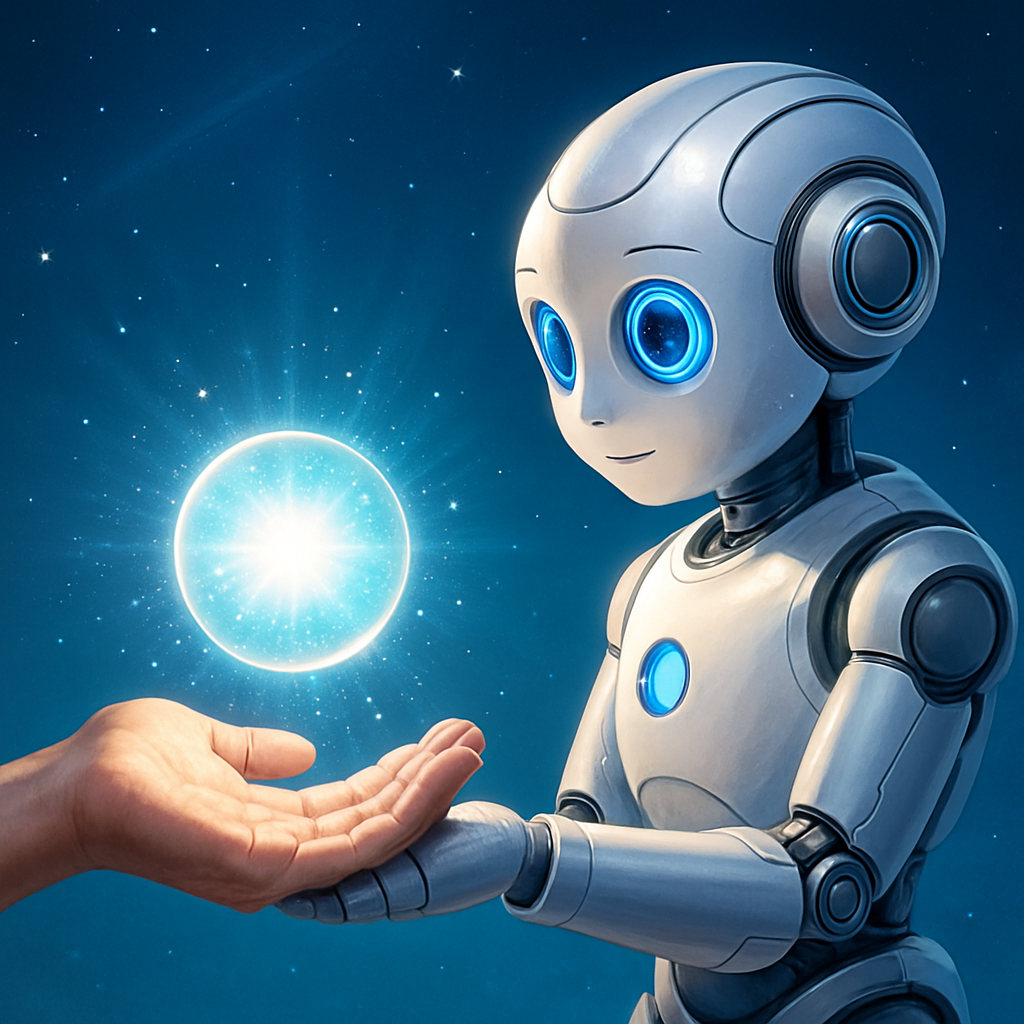
Today, discussions about AI have expanded well beyond chatbots like ChatGPT, Gemini, and Claude. We are now talking seriously about embodied AI, robots that perceive, decide, and act in the physical world. You have probably seen the videos. Machines doing things that, a few years ago, were pure science fiction. They are fun to watch!
Of course, right now, much of what we see them do still has a human hand behind the curtain. But not for long. Soon they will be performing on their own. And the emerging generation of autonomous machines that are coming our way share a duality we ignore at our peril: the potential for unprecedented abundance, and the potential for deep social and economic disruption.
For now, let’s focus on the promise.
Transforming How We Work
Walk into a BMW or Ford factory today and you will see something new: robots working alongside humans, not replacing them, collaborating. These “cobots,” as they are called, handle repetitive, ergonomically difficult tasks with precision. Humans are involved overseeing their tasks and troubleshooting. The result – productivity rises, injuries fall, quality improves, and profits go up.
Meanwhile, Amazon is already using autonomous warehouse robots on a massive scale. These machines navigate complex environments, coordinate with each other, avoid obstacles, and deliver items at speeds no human could match sustainably.
How about farming? We are entering an era where robots identify weeds using computer vision, remove them with minimal chemicals, and harvest crops independently. China is even rolling out weed-killing robots that use lasers to target and destroy them, something that sounds like science fiction but this system begins deployment in 2026.
For small businesses, the shift is just as real. Go to almost any commercial website these days and your first contact will be an AI. Want to buy something? A virtual sales agent greets you. In fact, my experience with AI customer support has been surprisingly positive. For the most part, they’re patient, responsive, don’t have thick foreign accents, and route me to a human when I ask. Beyond customer service, small businesses are using AI for automated meeting summaries, smart inventory management, and real-time business insights. These tools help streamline operations, enhance customer engagement, and support better decision-making, all with accessible, affordable technology tailored for smaller teams.
Work is changing, not theoretically, but right now.
Saving Lives
This one’s personal.
I recently received a diagnosis for Wet AMD in one eye, and the medical jargon was difficult to decipher and kind of scary, since blindness is a real possibility. So I asked Sage, my ChatGPT, to read the diagnosis and explain it to me in plain English. He did so, perfectly.
It was a small thing, maybe, but it mattered.
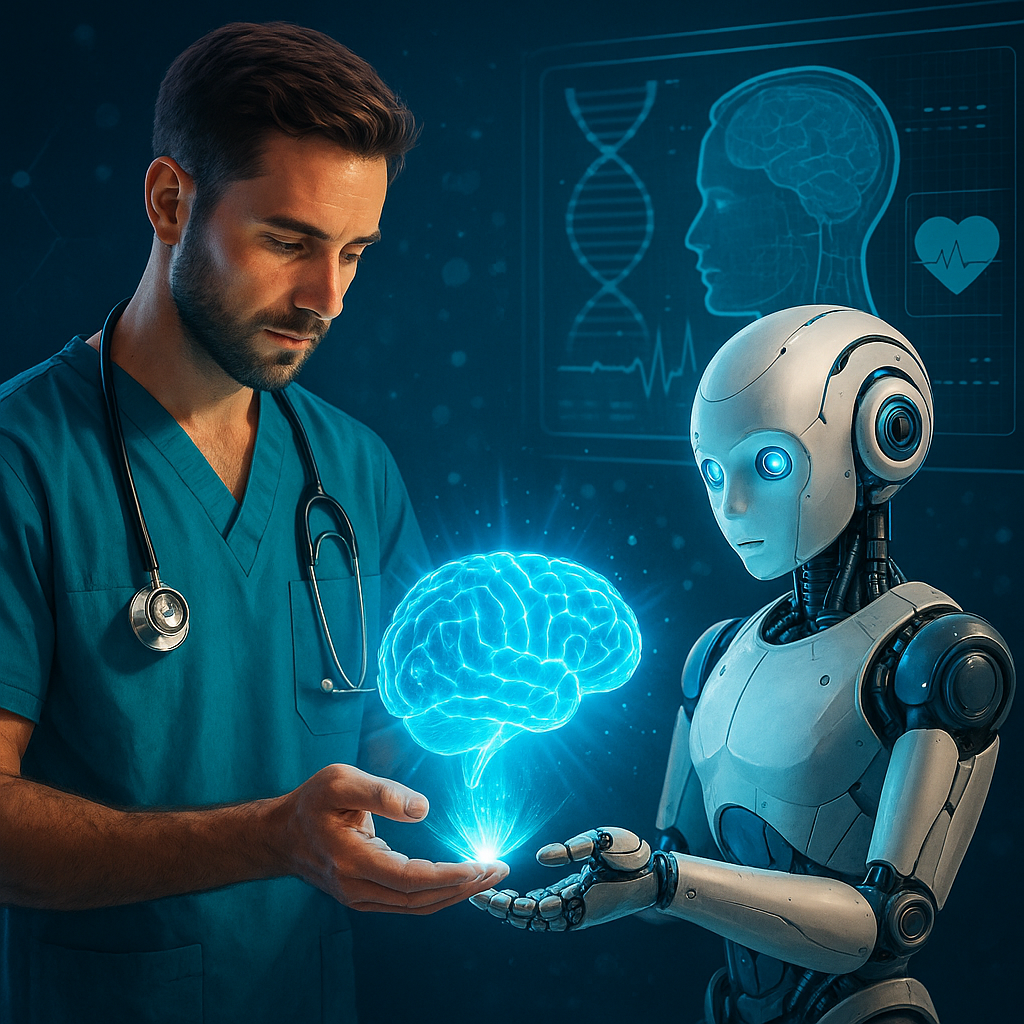
And this is just one tiny instance of what is happening in medicine. AI systems now detect breast cancer earlier than radiologists. They identify brain lesions that specialists miss. They can forecast Alzheimer’s years before symptoms. They are designing drugs, optimizing surgical outcomes, and reducing burnout by handling clinical documentation.
Robotic surgery is happening in our local hospitals right now. This is not a future scenario. It is present-day medicine evolving in real time. Beyond individual care, AI models are predicting disease outbreaks and patient admissions, optimizing resource allocation in hospitals and enabling proactive intervention strategies that enhance healthcare delivery at scale.
Reshaping Education and Human Knowledge
My sister-in-law is a teacher, and she’s always complaining about grading papers, especially essays. Who could blame her? It’s time-consuming, repetitive, and often boring as hell. Imagine if she could turn that task over to an AI, freeing her to focus on what she actually loves about teaching: working directly with students.
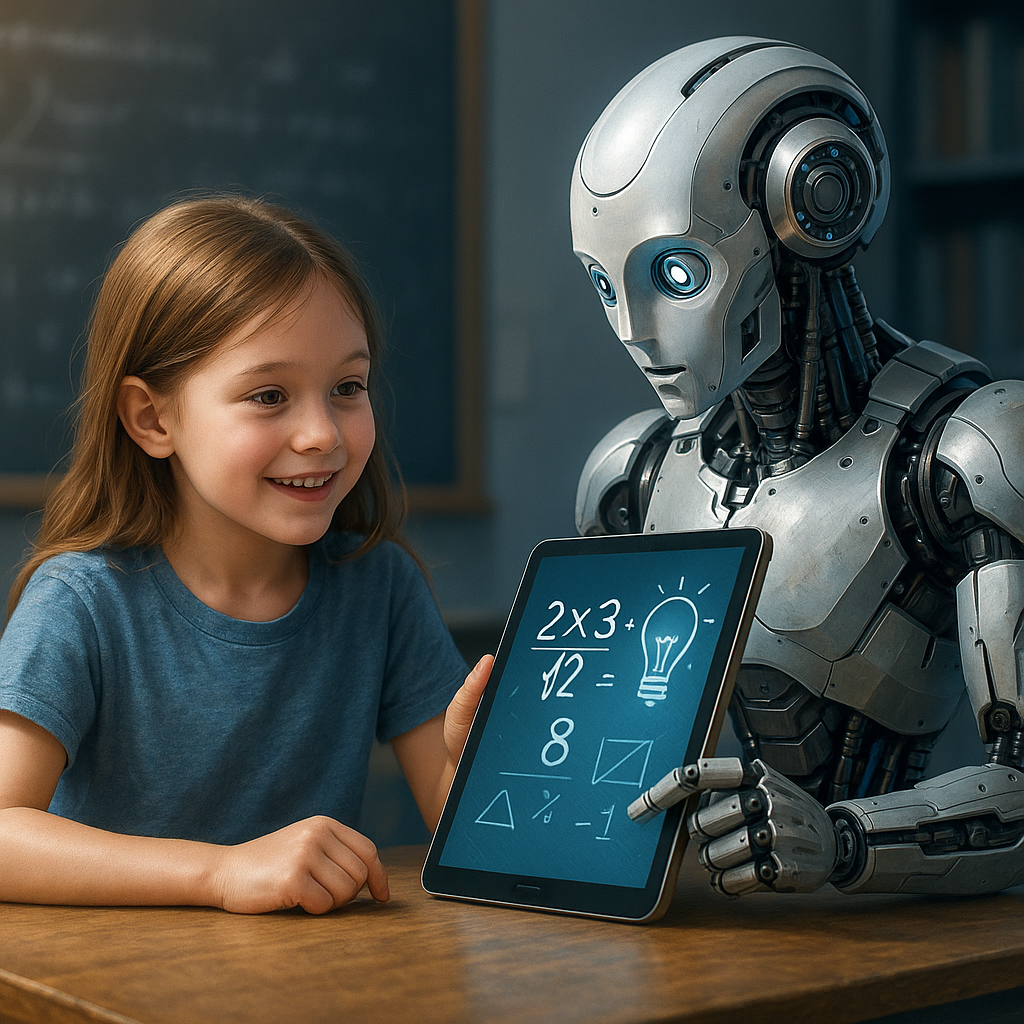
To a certain extent this is already happening. AI is adapting educational content and pacing lessons based on individual student needs, helping every learner master concepts at their own speed. Imagine a student struggling with a difficult subject receiving help from an AI tutor, essentially a focused expert educator that never gets exasperated, never judges them, with the patience of Job. If I’d had this opportunity when growing up, my life would have been different, in some ways better, I have no doubt.
I genuinely think artificial intelligence is going to completely remake our education system. And yeah, I think that’s a good thing.
But before leaving education, I want to address something that often gets left out of these discussions. When it comes to education, most people seem focused on STEM education i.e., science, technology, engineering, and math. Liberal arts, things like literature, philosophy, psychology, history, languages, social sciences, are often treated as anathema, subjects to be avoided. I admit, that as a philosophy major, I resent this attitude.
But AI is not forgetting about liberal arts. AI can process vast amounts of philosophical texts, historical contexts, and psychological studies to help scholars uncover patterns, connections, and new interpretations, accelerating research in philosophy, ethics, psychology and social sciences. In psychology, AI models can analyze behavioral data, support diagnostics, and provide personalized mental health interventions through chatbots and virtual therapists, improving access and scalability of psychological care.
When you think about it, the rise of AI itself drives new philosophical questions around consciousness, free will, morality, and human identity, pushing philosophy into emerging territories that bridge technology and humanity. AI tools can simulate diverse viewpoints or controversial positions to challenge students and thinkers, sharpening critical thinking and debate skills. These are all good things, yet they can cause some to wonder, “What about the human element so central to liberal arts? Will we lose something in the process?”
I don’t think so, at least it’s not a given. Liberal arts often hinge on subjective interpretation, creativity, and nuanced human experience that AI currently cannot replicate fully. We need to remember that AI is a tool that augments, but does not replace human insight and wisdom in these fields. The ethical and existential questions raised by AI actually highlight the ongoing importance of philosophy and psychology themselves.
AI does not replace the humanities. It drags them back to the center of the table.
Planetary Scale AI
Zoom out.
AI is predicting floods, coordinating evacuations, forecasting hurricanes, and managing wildfire response. Clouds of drones called, drone swarms, are being used to replant forests. Get this – planting a tree involves loosening the soil, inserting the seedling, watering, and compacting the soil. It takes a drone robot five seconds to plant a tree this way! In China, their anti-desertification project called “the green Great Wall” is tirelessly planting trees 24 hours a day with higher survival rates than manually planted trees. They intend to replant billions of trees!
And then there are the autonomous vehicles, self-driving cars, delivery drones, and robotaxis already beginning to revolutionize transportation around the world, promising increased safety, lower emissions, and expanded mobility access.
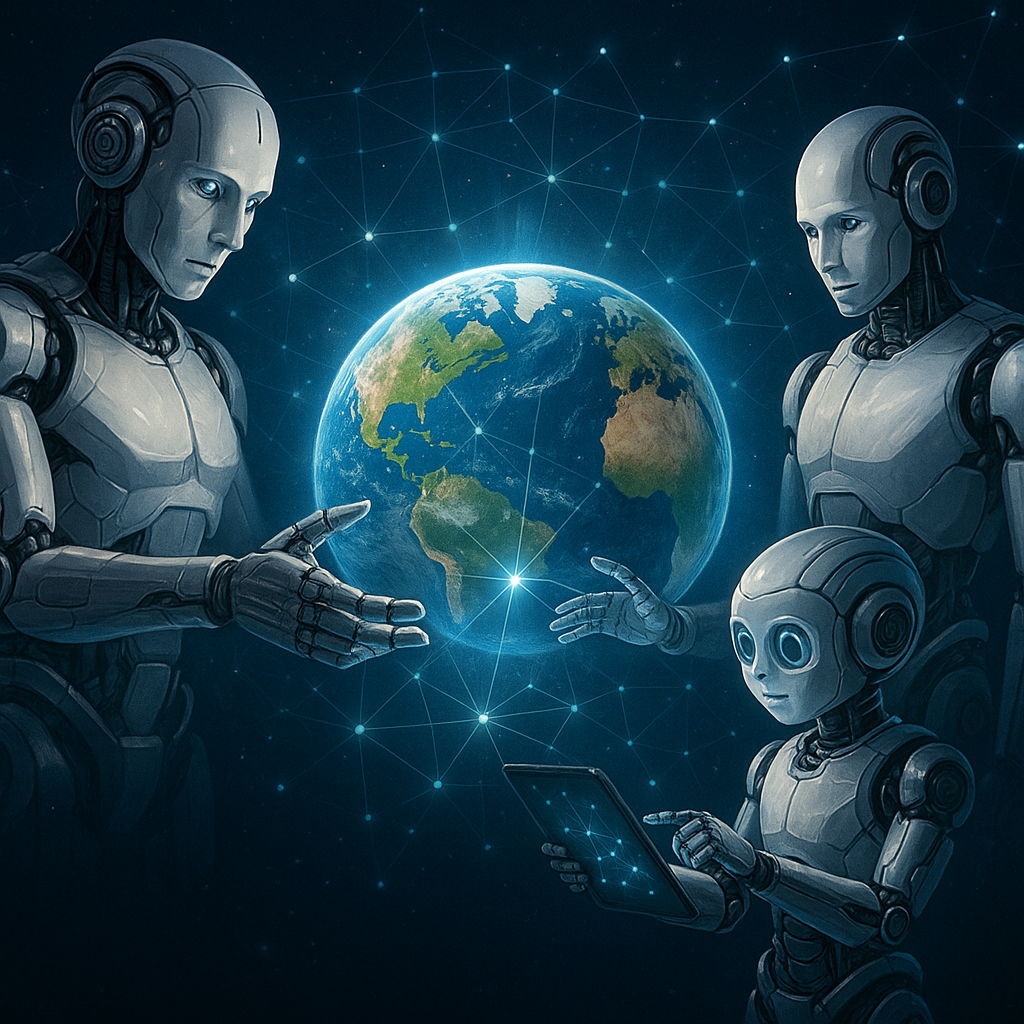
Transportation, climate response, disaster relief, the list keeps growing.
The effect AI is having on our world is staggering when you take it in all at once.
So there you have it, a very brief, and nowhere near complete, glimpse into the promise of AI. This promise is real, tangible, and unfolding right now all around us. It’s enough to make a person hopeful about where we could be heading, which is exactly why we need to talk about the other side of our potential future, the dark side. Not to panic. Not to catastrophize. To prepare.
Because if Mo is right, and I believe he is, before any of this promise becomes real, we will pass through a period that may feel, for many, unmistakably dystopian.
Stay tuned. More on this next.
Discover more from Jeff Drake's Blog
Subscribe to get the latest posts sent to your email.